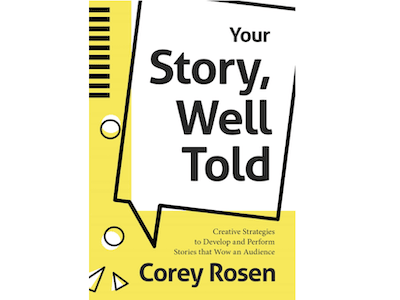
💡 Today’s Niblit: In “Your Story, Well Told,” Corey Rosen adapts the Heath Brothers’ SUCCESS framework to reveal what makes stories memorable and impactful. Understanding these principles can transform your stories from forgettable anecdotes into unforgettable experiences.
🔑 Key Insight: Stories that stick share specific characteristics: they’re Simple, Universal, Concrete, Credible, Emotional, and they follow a clear Story structure — creating the acronym SUCCESS. These elements work like mental velcro, making your stories adhere to listeners’ memories long after you’ve finished telling them.
Think of your brain as a crowded library where new information competes for shelf space. Stories that lack these SUCCESS elements get quickly discarded, while those that possess them earn permanent spots in the collection. A simple core message gives your story focus. Universal themes help listeners connect personally. Concrete details make abstract concepts tangible.
Why does this matter? In our attention-deficit world, being memorable isn’t just nice — it’s essential. Whether you’re networking, coaching, teaching, or simply connecting with friends, sticky stories ensure your message doesn’t just arrive, but actually stays and influences long-term thinking and behavior.
🦉 Nibble of Wisdom: “A story that sticks is a story that works. It changes minds, opens hearts, and moves people to action.”
🛠️ Practical Tip: Before sharing any story, ask yourself: “What’s the simple core message here?” If you can’t answer in one sentence, your story may need more focus.
🚀 Quick Action: Take a story you’ve been developing and run it through the SUCCESS checklist. Which elements are strong? Which need work? Spend five minutes strengthening the weakest element.
🔍 Further Exploration:
Reflect on the most memorable story someone has told you recently. Which SUCCESS elements made it stick?
Consider how you might apply these principles to improve a presentation or important conversation.
Explore the fascinating concept of elaborative encoding, which explains how our brains better remember information that’s been processed in multiple ways, exactly what good stories accomplish.
🎬 Wrapup: By consciously crafting stories using the SUCCESS framework, you’re not just telling better stories — you’re becoming a more effective communicator who can cut through noise and create lasting impact. Your stories will no longer just be heard; they’ll be remembered, retold, and acted upon.