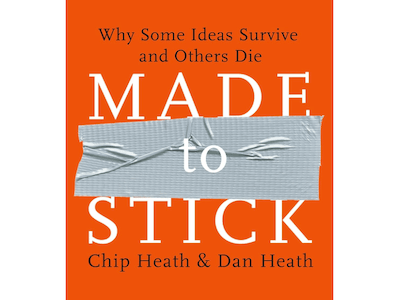
💡 Today’s Niblit: A bag of movie popcorn contains more fat than a bacon-and-eggs breakfast, Big Mac and fries, and steak dinner combined. This concrete comparison fromMade to Stick sparked nationwide outrage and changed an entire industry, while the abstract statistic “37 grams of saturated fat” left audiences unmoved. The Heath brothers discovered that concrete language doesn’t just clarify ideas, it makes them unforgettable.
🔑 Key Insight: Our brains are wired to remember concrete details far better than abstract concepts. When teachers in Asia explain subtraction by physically removing tiles from a desk, students grasp the concept faster than when taught through symbolic manipulation alone. Concrete language creates mental hooks that abstract language simply cannot.
Think of trying to remember a credit card number versus remembering your childhood bedroom. The bedroom floods your mind with sensory details — the color of the walls, the texture of the bedspread, the sound of footsteps in the hallway. These sensory hooks make memories stick like Velcro, while the credit card number slides away like water off glass.
Concreteness forces everyone in your audience to picture the same thing. When you say “reliable,” different people imagine different things. When you say “works like a Swiss watch,” everyone sees precision.
🦉 Nibble of Wisdom: Memory isn’t like a filing cabinet — it’s like Velcro. The more sensory hooks you give an idea, the better it sticks.
🛠️ Practical Tip: Replace one abstract word in your next important message with a concrete image that people can see, hear, touch, taste, or smell. For example: “Our customer service team will provide exceptional support.” (boring and abstract) vs. “Our customer service team will warm up your car in winter while you finish shopping.” (an actual Nordstrom example from the book — showing rather than telling what “exceptional service” looks like through a specific, sensory action people can visualize.)
🚀 Quick Action: Take your elevator pitch and count how many concrete nouns versus abstract nouns you use. Aim for at least twice as many concrete ones.
🔍 Further Exploration:
Notice how effective teachers use physical props and demonstrations rather than just explanations
Consider how dual coding theory explains why concrete images enhance both understanding and memory
Watch how successful salespeople use concrete language to help customers visualize ownership
🎬 Wrapup: Abstract ideas live in the clouds — concrete ones plant their feet firmly on the ground where people can find them. When you paint pictures with words, you don’t just communicate information; you create experiences that stick in minds long after the conversation ends.
I’m starting a new daily newsletter sharing insights I gleaned from a decade as the Chief Research Officer at Wealth Factory. I’ll show you how to build your own Personalized Wealth System based on the 8 Pillars of Wealth I’ve identified.