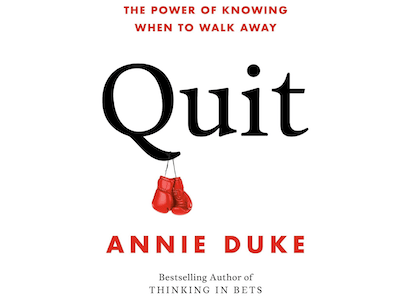
💡 Today’s Niblit: In her book Quit, Annie Duke exposes how our powerful bias toward maintaining the status quo keeps us trapped in suboptimal situations, making change feel riskier than it actually is while inaction feels safer than it is.
🔑 Key Insight: We systematically overweight the risks of changing course while underweighting the risks of staying put. This status quo bias makes us treat “doing nothing” as if it’s not a decision — when it’s actually one of the most consequential choices we make.
Imagine you’re unhappy in your job but hesitate to look for a new one because change feels risky. Meanwhile, you ignore the very real risk of career stagnation, skill deterioration, and missed opportunities that come with staying.
Why does this matter? Status quo bias creates an asymmetry in how we perceive risk. We vividly imagine what could go wrong if we change, but we rarely consider what definitely will go wrong if we don’t.
🦉 Nibble of Wisdom: “Worldly wisdom teaches that it is better for reputation to fail conventionally than to succeed unconventionally” — John Maynard Keynes.
🛠️ Practical Tip: When facing a stay-or-go decision, explicitly list the risks of maintaining your current path alongside the risks of changing. Make the invisible costs of inaction visible.
🚀 Quick Action: Identify one area where you’ve been avoiding change. Write down three specific risks you’re taking by staying put that you might not have considered.
🔍 Further Exploration:
Discover how omission bias makes us prefer harmful inaction over beneficial action, even when the outcomes are identical.
Consider whether you’re treating any “non-decisions” as if they don’t have consequences.
Examine areas where fear of regret about action might be preventing you from considering regret about inaction.
🎬 Wrapup: Remember, choosing not to change is still a choice — and often a riskier one than we think. Make sure you’re choosing your status quo deliberately, not by default.