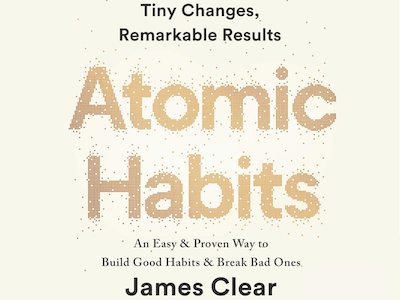
💡 Today’s Niblit: Your environment is the invisible hand that shapes your behavior. In “Atomic Habits,” James Clear emphasizes the power of environment design in forming and maintaining habits.
🔑 Key Insight: Imagine you’re a fish, swimming along, minding your own fishy business. Suddenly, you’re scooped up and plopped into a new aquarium. Your behavior would instantly change to adapt to this new environment, right? Well, guess what? You’re that fish, and your home, office, and digital spaces are your aquarium.
We often think our behaviors are driven purely by motivation and willpower. But the truth is, our surroundings play a massive role in what we do. Want to eat healthier? Put fruits at eye level in your fridge and hide the junk food in opaque containers. Trying to read more? Leave books on your nightstand and your TV remote in a drawer.
This isn’t about iron willpower; it’s about being a clever architect of your world. By tweaking your environment, you can make good habits the path of least resistance and bad habits an uphill battle.
Think of it as setting up your surroundings to be your very own habit cheerleader. Every object in your environment is a little voice, either whispering “do it” or “don’t do it.” Your job is to make sure the “do it” voices for your desired habits are louder and more numerous.
🦉 Nibble of Wisdom: Disciplined people often appear to have more willpower, but in reality, they’ve just structured their lives to reduce the need for willpower.
🛠️ Practical Tip: Use the “visibility rule.” Make cues for good habits obvious and visible, and hide cues for bad habits. Want to drink more water? Put a full water bottle on your desk. Trying to cut back on social media? Delete the apps from your home screen.
🚀 Quick Action: Choose one habit you want to build. Now, brainstorm three ways you could change your environment to make that habit easier or more obvious. Implement at least one of these changes today.
🔍 Further Exploration:
Research the concept of “choice architecture” and how it’s used in public policy and marketing.
Try the “resetting the room” technique: Before leaving a room, spend 30 seconds setting it up to make your desired behaviors easier when you return.
🎬 Wrapup: You’re not just a passive player in your environment; you’re the designer. By shaping your surroundings, you’re effectively programming your future behaviors. So, roll up your sleeves and start redecorating your life for success!