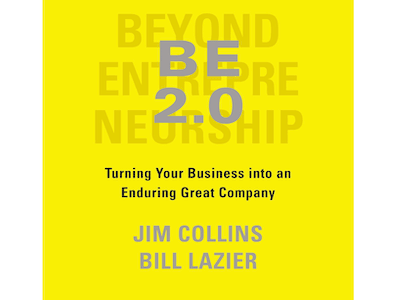
💡 Today’s Niblit: InBE 2.0 (Beyond Entrepreneurship 2.0), Jim Collins and Bill Lazier show how great companies anchor themselves in a powerful triadic vision:
Unwavering core values
A purpose beyond profits and
One jaw-dropping, ambitious goal.
This framework acts as the North Star that guides every decision, making your company resilient, even during the most turbulent times.
🔑 Key Insight: The vision framework isn’t just a poster on the wall—it’s a living system comprising three essential elements: core values, core purpose, and a Big Hairy Audacious Goal (BHAG). These elements work together like a navigation system, ensuring everyone knows who you are, why you exist, and where you’re heading, even when markets shift or competitors emerge.
Think of your organization as a ship on a long journey. Your core values are the unchanging principles the captain and crew live by (like “integrity above all” or “customer obsession”), your purpose is the reason for the voyage beyond just carrying cargo, and your BHAG is that distant, challenging destination that gets everyone excited to sail each day. Without all three elements working in harmony, your ship might zigzag aimlessly or, worse, crash against the rocks during the first storm.
Why does this matter? In today’s chaotic business landscape, companies without a clear vision framework make reactive decisions, chase every trend, and ultimately lose their identity. Those with a strong vision framework maintain clarity and unity even amid disruption, enabling them to make consistent decisions that build toward lasting greatness rather than fleeting success.
🦉 Nibble of Wisdom: “The function of leadership is to catalyze a clear and shared vision and secure commitment to that vision.” — Jim Collins, Chapter 8
🛠️ Practical Tip: Gather your leadership team and draft the three components of your vision framework on a single sheet of paper—it must be simple enough for anyone to understand and remember.
🚀 Quick Action: Right now, grab a notebook and write down what you believe are your organization’s 3-5 core values—the principles you would uphold even if they put you at a competitive disadvantage. Then ask yourself: “Do our daily decisions actually reflect these values, or are they just nice-sounding words?”
🔍 Further Exploration:
Consider how your personal values align with your organization’s stated values—any misalignment might explain feelings of friction or disengagement.
Reflect on whether your team can articulate your company’s purpose without mentioning financial outcomes—if they can’t, you may need to better communicate why you exist.
Explore the concept of organizational alignment and how companies with strong vision-strategy-execution connections consistently outperform those where these elements remain disconnected.
🎬 Wrapup: Remember, your vision framework isn’t something you create once and file away—it’s something you must “knead into the organization” daily, like working yeast into bread dough. By consistently reinforcing these elements in your decisions, hiring practices, and communications, you’ll build an organization that knows exactly who it is and where it’s going, no matter what challenges arise.