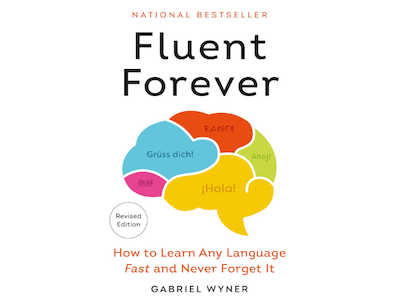
💡 Today’s Niblit: In Fluent Forever, Gabriel Wyner reveals that training your ears before learning vocabulary is the foundation of successful language acquisition. This approach prevents pronunciation errors that become nearly impossible to fix later.
🔑 Key Insight: Most language courses start with vocabulary and grammar, completely skipping the critical foundation of sound. This leads to permanent pronunciation issues that make you instantly recognizable as a non-native speaker, regardless of your vocabulary size.
Think of pronunciation as the soil in which your language garden grows. Poor soil leads to stunted plants, no matter how premium your seeds or diligent your watering. Similarly, skipping proper sound training means even sophisticated grammar and vocabulary will sound “off” to native speakers — and worse, you’ll miss nuances when listening because your brain literally cannot hear certain sound distinctions.
This matters because pronunciation is infinitely easier to get right from the beginning than to fix later. By spending just 2-3 weeks training your ears with minimal pairs and the International Phonetic Alphabet (IPA) before diving into vocabulary, you’ll develop an ear for the language that pays dividends throughout your entire learning journey.
Personal note from Tom: When I learned Spanish 35 years ago in an immersion program in Mexico, the approach focused on mastering sounds before grammar just like this book teaches. Living with a non-English speaking family while taking classes that prioritized pronunciation gave me a tremendous advantage. After just 3 months, I could converse more effectively with natives than classmates who arrived with 4-8 years of “school” Spanish. They knew more grammar rules and had a bigger vocabulary, but most of them struggled to even understand our teacher (who spoke in rapid, native Spanish only) — and many could not maintain fluent conversations while I communicated comfortably with locals. The point is, if you are going to learn a foreign language, do it like this book teaches.
🦉 Nibble of Wisdom: “Training your ears before learning vocabulary is the single most important and overlooked step in language learning.” (Chapter 2)
🛠️ Practical Tip: Use minimal pairs training — listening to and distinguishing between similar-sounding words (like “sheep” vs. “ship”) in your target language.
🚀 Quick Action: Visit Forvo.com right now and search for five common words in your target language. Listen to native pronunciations repeatedly, trying to mimic exactly what you hear, not what you think you should hear.
🔍 Further Exploration:
Record yourself saying words, then compare with native speakers. The gaps might surprise you!
I highly recommend you watch this (fascinating) 2-minute video on the McGurk effect, an auditory “illusion” where what you see affects what you hear, showing how our brains filter language input (is he saying “baa” or “faa?” 😂)
Practice with an IPA chart to understand exactly how each sound is formed in the mouth.
🎬 Wrapup: Remember, your ears are the gatekeepers to language learning. By training them first, you’re not just learning faster — you’re building a foundation that ensures everything you learn afterwards will sound authentically native. Now, go sharpen those ears!