Label Emotions to Defuse Tension
Hi Reader,
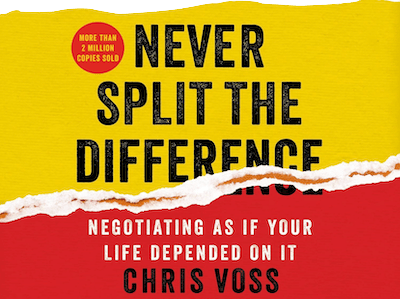
💡 Today’s Niblit: Want to turn a heated argument into a productive conversation? In “Never Split the Difference,” Chris Voss introduces a powerful technique called labeling that can transform tense situations and give you the upper hand in any negotiation.
🔑 Key Insight: Labeling is the act of verbally acknowledging the emotions of your counterpart. It’s like holding up a mirror to their feelings, showing them that you truly see and understand their perspective. This isn’t about agreeing with them, but about recognizing their emotional state.
Imagine you’re a bomb disposal expert. Each emotion is like a wire that could detonate the situation. Labeling is your tool to carefully identify and neutralize these emotional triggers, one by one. By naming the emotion, you diffuse its power and create space for rational discussion.
Why does this matter? In any high-stakes conversation, unacknowledged emotions can derail progress faster than you can say “deal-breaker.” By mastering the art of labeling, you’re not just avoiding pitfalls — you’re paving the way for mutual understanding and more favorable outcomes.
🦉 Nibble of Wisdom: The simple act of naming an emotion can reduce its intensity and open the door to resolution.
🛠️ Practical Tip: Use phrases like “It seems like…” or “It sounds like…” to introduce your labels, making them feel less confrontational.
🚀 Quick Action: In your next potentially tense conversation, challenge yourself to identify and label at least three emotions you observe in the other person. Pay attention to how this impacts the flow of the discussion.
🔍 Further Exploration:
- Research the psychological concept of “affect labeling” and its impact on emotional regulation
- Study the body language cues that can help you accurately identify emotions
- Practice labeling your own emotions in a journal to increase your emotional vocabulary
🎬 Wrapup: Remember, labeling isn’t about manipulation — it’s about connection. By acknowledging the emotions in the room, you’re not just winning arguments; you’re building bridges of understanding that can last long after the negotiation ends.
🔗 Links:
Label with care,
Tom “Emotion Decoder” Bernthal