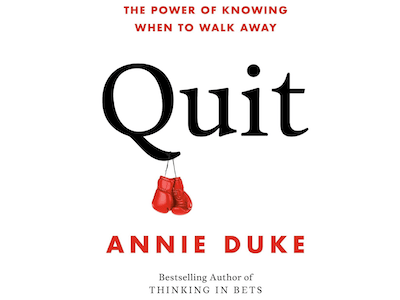
💡 Today’s Niblit: In “Quit,” Annie Duke reveals why identity-based decisions are the most difficult to abandon, explaining how our self-concept becomes entangled with our choices and makes rational reassessment nearly impossible.
🔑 Key Insight: When a decision becomes part of your identity, quitting feels like abandoning who you are, not just what you do. This powerful psychological barrier explains why people persist with failing ventures long after objective evidence suggests they should quit.
It’s like a professional athlete continuing past their prime — their entire self-concept is wrapped up in being “the champion,” making retirement feel like an existential threat rather than a practical decision.
Why does this matter? Identity-based persistence creates the strongest form of escalation of commitment. The more publicly you’ve defined yourself by a choice, the more cognitive dissonance you’ll experience when considering abandoning it.
🦉 Nibble of Wisdom: The strongest chains are the ones we forge ourselves through identity — break these, and quitting becomes possible.
🛠️ Practical Tip: Define yourself by your values and character, not by specific projects, roles, or ventures that may need to change.
🚀 Quick Action: List three ways you currently define yourself. For each, write a broader identity that would allow more flexibility in your choices.
🔍 Further Exploration:
Explore how cognitive dissonance theory explains why we experience psychological distress when our actions contradict our beliefs about ourselves.
Consider how public commitments make it harder to change course when necessary.
Examine whether you have any “sacred cows” — choices you refuse to reconsider because they feel fundamental to who you are.
🎬 Wrapup: Your identity should serve you, not trap you. Create space between who you are and what you do, so that changing direction doesn’t feel like changing yourself.