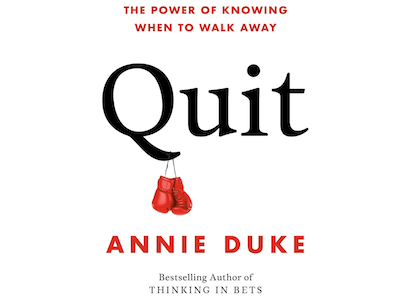
💡 Today’s Niblit: In “Quit,” Annie Duke shows how our deep aversion to losses can keep us stuck in failing ventures. Understanding this psychological pitfall can help us make better decisions about when to keep going — and when to walk away (or “quit” as she puts it).
🔑 Key Insight: When we’re wallowing in losses, our decision-making becomes dangerously distorted. Research shows losing feels almost twice as painful as winning feels good. This drives us to become irrational risk-takers in an effort to avoid more loss or “make up” for them.
Think about a gambler who’s down at the casino. Rather than accept the sure loss by walking away, they’ll often make increasingly risky bets hoping to win back their losses and at least break even. This same psychology plays out in business, relationships, and careers — anywhere we’ve invested time or resources.
Why does this matter? This resistance to quitting when the losses are piling up can easily lead us to throw good money after bad. We also end up wasting a lot of time and effort in the process. In trying to reverse the pain of a loss, we usually make things even worse.
🦉 Nibble of Wisdom: The path to better decisions starts with accepting that some losses are inevitable — it’s how we handle them that matters.
🛠️ Practical Tip: Before starting any new venture, write down specific conditions that would signal it’s time to quit. Review these regularly and commit to following them regardless of emotions.
🚀 Quick Action: Think of something you’re currently pursuing where you feel “in the losses.” Write down the future costs of continuing versus the costs of quitting, ignoring what you’ve already invested.
🔍 Further Exploration:
Consider how prospect theory explains why we take bigger risks to avoid losses than to achieve gains.
Examine whether you’re treating any current decisions as “all or nothing” when partial success might be acceptable.
Look for areas where you might be falling prey to the “completion bias” — the tendency to pursue completion even when it’s no longer worthwhile.
🎬 Wrapup: Remember, good decision-makers aren’t afraid to take losses — they’re afraid of taking unnecessary losses by refusing to quit when they should.