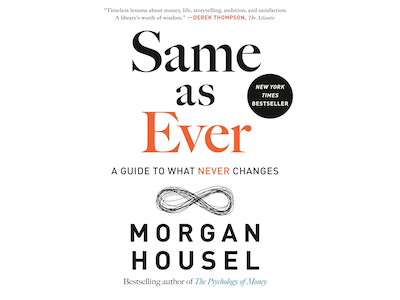
💡 Today’s Niblit: Morgan Housel suggests in Same as Ever that humans are hardwired to repeat the same financial and emotional mistakes, despite having access to more information and historical data than any generation before us. The same behavioral patterns that created every market bubble, panic, and crash in history are still fully alive and well today.
🔑 Key Insight: Human nature operates like a broken record player — it keeps skipping back to the same groove. Despite witnessing countless market crashes, reading about tulip mania, and watching friends lose fortunes in crypto bubbles, we convince ourselves “this time is different.” The traits that make people euphoric during booms are identical to those that trigger panic during busts: fear, greed, FOMO, and overconfidence.
Think of your brain as having two operating systems: the logical software that learns from history, and the emotional hardware that hasn’t been updated to match. While your software accumulates knowledge about compound interest and market cycles, your hardware still responds to financial threats like a caveman facing a saber-toothed tiger. The hardware always wins when emotions run high.
This matters because recognizing this pattern is your financial superpower. While others repeat the same costly mistakes — buying high when everyone’s celebrating and selling low when panic strikes — you can build systems that override your emotional impulses and profit from predictable human behavior.
🦉 Nibble of Wisdom: “The same traits that make people optimistic during a boom are the same ones that make them panic during a bust.” — Chapter 1
🛠️ Practical Tip: Create “emotional circuit breakers” for your money decisions. Write down your investment principles when you’re calm and rational, then commit to following them regardless of how you feel in the moment.
🚀 Quick Action: Right now, write down the last financial mistake you made and identify which emotion drove it (fear, greed, FOMO, or overconfidence). Then write one specific rule that would have prevented that mistake. Keep this note where you’ll see it during your next financial decision.
🔍 Further Exploration:
Reflect on a time when you said “this time is different” about an investment, relationship, or major decision. What pattern were you actually repeating?
Consider how you might profit from others’ predictable irrationality rather than fighting your own emotional responses.
Explore the concept of recency bias and how your brain overweights recent events when making predictions about the future.
🎬 Wrapup: Your emotions aren’t broken — they’re just running outdated software in a modern world. By accepting that you’ll never fully overcome these impulses, you can design systems that work with human nature instead of against it.