Why Most Messages Get Lost (And Yours Doesn’t Have To)
Hi Reader,
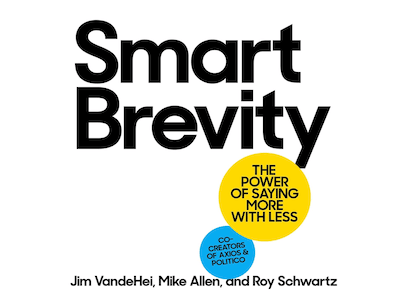
💡 Today’s Niblit: In “Smart Brevity,” Jim VandeHei, Mike Allen, and Roy Schwartz disclose what I’ve found might be the most valuable insight in modern communication: identify and trumpet ONE thing you want people to remember. It’s what I try to do every day here in this little daily email.
🔑 Key Insight: Most communications fail because they try to convey too many points at once. The human brain is wired to remember at most one key message from any interaction — so your job is to decide what that one thing should be.
Ever notice how the most memorable speeches in history boil down to a single sentence we all remember?
“I have a dream.”
“Ask not what your country can do for you.”
“The only thing we have to fear is fear itself.”
These weren’t random soundbites — they were deliberately crafted as the ONE central message everything else supported. When you try to make multiple points with equal emphasis, you end up making no point at all.
Why does this matter? In our distracted world, clarity and focus aren’t just nice-to-haves — they’re essential for being heard. Research shows people remember only about 10% of what they hear after 48 hours. By focusing on ONE Big Thing, you dramatically increase the odds that your core message will be what survives.
🦉 Nibble of Wisdom: If you don’t know your ONE sentence, there’s no chance your audience will.
🛠️ Practical Tip: Before writing anything, complete this sentence: “The ONE thing I want my audience to remember is…” Then make everything else support that point.
🚀 Quick Action: Review a recent email or presentation you created. Could someone easily identify your ONE Big Thing? If not, rewrite your opening to state it clearly and directly in the first sentence.
🔍 Further Exploration:
Explore how the “serial position effect” explains why placing your ONE Big Thing at the beginning (and repeating it at the end) increases retention.
Consider how the von Restorff effect (isolation effect) can help you make your ONE Big Thing stand out.
Practice the “elevator pitch” challenge: can you express your ONE Big Thing in the time it takes to ride an elevator?
🎬 Wrapup: Remember, having ONE clear message doesn’t mean being shallow — it means being focused. Your supporting points can provide depth and nuance, but they should all serve your ONE Big Thing.