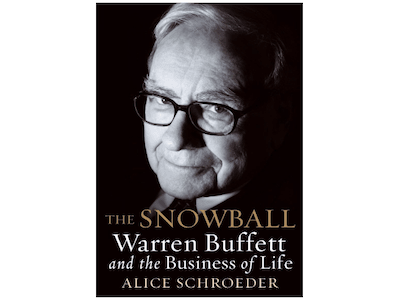
💡 Today’s Niblit: In The Snowball: Warren Buffett and the Business of Life, Alice Schroeder reveals how Buffett’s fortune grew from tiny, persistent actions compounded over decades. This “snowball effect” demonstrates how anyone can build extraordinary wealth through patience and reinvestment.
🔑 Key Insight: The snowball effect describes how wealth accumulates exponentially when gains are continuously reinvested, much like a snowball gathering more snow as it rolls downhill. Buffett didn’t create his billions through dramatic one-time deals or risky gambles — he built it systematically by reinvesting profits and allowing his money to work for him year after year.
Picture yourself rolling a tiny snowball at the top of a hill. At first, progress seems agonizingly slow as you carefully pack on small amounts of snow. But as the ball grows and gains momentum downhill, it begins absorbing more snow with each rotation, transforming from a handful into something massive almost automatically.
Why does this matter? In a world obsessed with get-rich-quick schemes and overnight success stories, the snowball principle reveals that most substantial fortunes are actually built through consistency and time. When you understand the staggering power of compounding, you realize that starting small and staying patient isn’t just an option — it’s the most reliable path to financial abundance.
🦉 Nibble of Wisdom: “I always knew I was going to be rich. I don’t think I ever doubted it for a minute.” Buffett’s certainty came not from arrogance but from understanding that consistent compounding virtually guarantees results over time.
🛠️ Practical Tip: Dedicate a percentage of each paycheck or business profit to investments that can grow over time, and commit to never touching these funds for short-term wants.
🚀 Quick Action: Calculate how $100 invested monthly would grow over 30 years at an 8% annual return ( it’s over $150,000). Then set up an automatic transfer for whatever amount you can consistently manage, even if it’s just $25 per month to start. Then look for ways to increase that amount over time.
🔍 Further Exploration:
Consider your current financial decisions through the lens of “future compounding potential” — which choices create snowballs and which ones melt away opportunities?
Look for areas in your life where you might be sacrificing long-term compounding for immediate gratification.
🎬 Wrapup: Remember, the snowball effect doesn’t demand brilliance or luck — it requires consistency and patience. By starting today, reinvesting consistently, and giving your money time to work, you’re setting in motion a financial force that grows more powerful with each passing year.