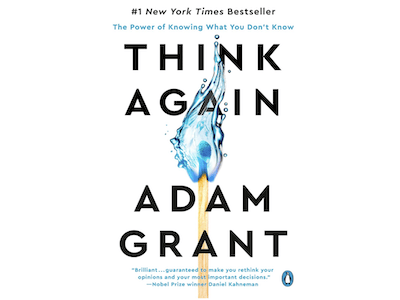
💡 Today’s Niblit: In Think Again, Adam Grant introduces us to some unusual people who react with delight when they discover they’re wrong. From Nobel Prize winners to world-class forecasters, these “intellectual athletes” don’t just tolerate being wrong—they celebrate it. Grant reveals how this counterintuitive mindset transforms mistakes from sources of shame into catalysts for growth.
🔑 Key Insight: Most of us treat being wrong like a personal failure. But elite thinkers—from scientists to superforecasters—often react with joy when they discover they’re wrong. This isn’t just psychological quirk; it’s because being wrong means you’ve just learned something new.
Think about what happens when children discover something surprising. Their eyes widen, they smile, they want to know more. But somewhere along the way, many of us lost that delight in discovery and replaced it with fear of error. World-class thinkers recapture this childlike wonder. When Nobel Prize-winning psychologist Daniel Kahneman was told he was wrong about a prediction, his response was telling: “That’s wonderful,” he exclaimed with genuine excitement, “I was wrong!”
Why does this matter? Our resistance to being wrong isn’t just about pride—it’s a massive obstacle to learning and growth. When we fear being wrong, we stop asking questions, stop exploring alternatives, and cling to outdated ideas long past their expiration date. Finding joy in being wrong isn’t just more pleasant—it’s the fast track to becoming wiser.
🦉 Nibble of Wisdom:“Being wrong isn’t always a bad thing. It can be a sign that we’ve learned something new. As Kahneman told me, ‘Being wrong is the only way I feel sure I’ve learned anything.'” – Chapter 3
🛠️ Practical Tip: Start keeping a “rethinking journal” where you record instances when you’ve changed your mind. Review it periodically to celebrate how much you’ve grown and learned.
🚀 Quick Action: Think about the last time you realized you were wrong about something important. Instead of cringing at the memory, write down what you learned from the experience that you wouldn’t have discovered otherwise.
Reflect on whether you’ve ever experienced a moment of genuine excitement upon being corrected
Examine how your identity might be overly attached to certain beliefs, making it harder to rethink them
🎬 Wrapup: The ability to find joy in being wrong isn’t just a nice personality trait—it’s intellectual rocket fuel. When we stop seeing errors as failures and start seeing them as discoveries, we transform from rigid defenders of what we think we know into agile explorers of what we have yet to learn.